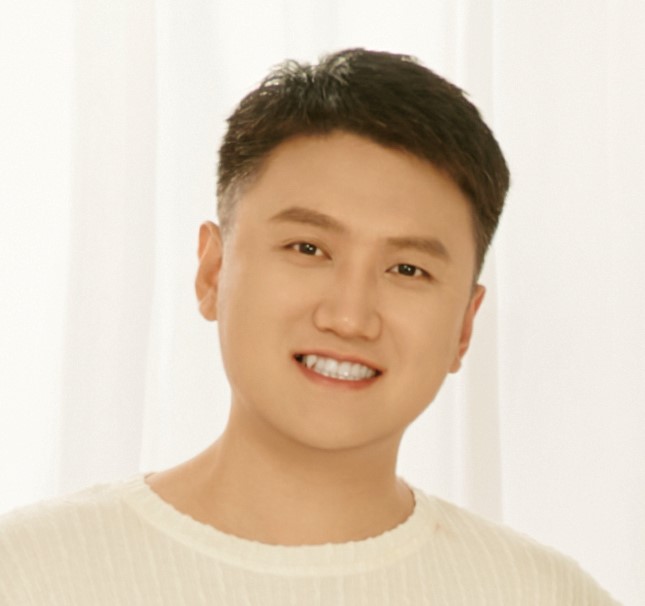
About Me
I am a researcher at Xiaomi MiMo. From 2021 to 2025, I was a senior researcher at the System Group in Microsoft Research Asia. I received my Ph.D. degree in Computer Science from Harbin Institute of Technology (HIT) in 2021 through a joint-PhD program with MSRA. Prior to that, I earned my B.E. degree in Computer Science from HIT in 2016. From 2015 to 2021, I served as a long-term intern at MSRA's system area mentored by Dr. Ningyi Xu, and Dr. Lintao Zhang.
My research interests lie at the intersection of computer system/architecture and deep learning, including domain-specific architectures, software-hardware co-design, deep learning compression and acceleration. More recently, my research has been focused on full-stack codesign for efficient LLM inference—spanning model architecture, inference optimization (low-bit quantization, sparse attention, speculative decoding, etc.), and hardware.
I am actively seeking talents for both full-time positions and research internships throughout the year. Please feel free to contact me.
Recently, I have also become passionate about improving large language models' ability to design chips (AI for chip design). If you are interested in exploring this new direction, please feel free to contact me. See our MiMo AI for Chip / EDA research internship opening.
News
- 2026/11 I am serving on the ISCA 2027 program committee.
- 2026/09 We released HySparse2, a hybrid sparse attention architecture that combines two-level KV sharing with token-level sparsity to reduce prefill computation and KV-cache storage while improving long-context retrieval and multi-turn agent performance. HySparse2 is the core architecture of MiMo V3.
- 2026/06 We release MiMo-V2.5-Pro-UltraSpeed, which achieves over 1000 tokens per second generation for a trillion-parameter model for the first time—on a single 8-GPU commodity node without custom hardware. Inference speed is the new lever of intelligence.
- 2026/02 We released a new paper HySparse, a hybrid sparse attention architecture that uses only a very small number of full attention layers to provide both important token selection and shared KV cache, while the remaining sparse attention layers directly reuse this information for efficient long-context modelling.
- 2026/01 SeerAttention-R is accepted to ICLR 2026.
- 2025/12 We released MiMo-V2-Flash, a Mixture-of-Experts (MoE) model with 309B total parameters and 15B active parameters, designed for fast, strong reasoning and agentic capabilities. MiMo-V2-Flash adopts a hybrid attention architecture that interleaves Sliding Window Attention (SWA) with global attention, using a 128-token sliding window under a 5:1 hybrid ratio.
- 2025/11 BitDecoding is accepted to HPCA 2026.
- 2025/09 SeerAttention is accepted to NeurIPS 2025.
- 2025/07 I am serving on the HPCA 2026 program committee.
- 2025/06 We released SeerAttention-R [code], a sparse attention framework aimed to improve the long decoding efficiency of reasoning models. With a lightweight plug-in gating, SeerAttention-R is flexible and can be easily integrated into existing pretrained model without modifying the original parameters. SeerAttention-R, trained on just 0.4B tokens, maintains near-lossless reasoning accuracy with 4K token budget in AIME benchmark under large sparse attention block sizes (64/128). AttnGate adaptors are available at Huggingface.
- 2025/05 bitnet.cpp is accepted to ACL 2025.
- 2025/03 LUT Tensor Core is accepted to ISCA 2025.
- 2024/10 We released SeerAttention [code], a new Attention mechanism that augments the conventional attention with a learnable gate that adaptively selects significant blocks in an attention map and deems the rest blocks sparse. By natively learning the attention sparsity in LLMs, SeerAttention can achieve a remarkable 90% sparsity ratio at a 32k context length with minimal perplexity loss, offering a 7.3× speedup over FlashAttention-2.
- 2024/08 T-MAC [code] is accepted to EuroSys 2025. T-MAC is a kernel library to directly support mixed-precision matrix multiplication (int1/2/3/4 x int8/fp16/fp32) without the need for dequantization by utilizing lookup tables (LUT). Specifically, T-MAC provides the LUT-based kernel foundation for bitnet.cpp.
- 2024/05 BitDistiller [code] is accepted to the ACL 2024 main conference.
- 2024/04 We released BitBLAS and T-MAC, libraries to support mixed-precision matrix multiplications on GPU and CPU respectively, specially designed for low-bit LLM deployment.
- 2024/03 Our paper Ladder: Enabling Efficient Low-Precision Deep Learning Computing through Hardware-aware Tensor Transformation [code] is accepted to OSDI 2024.
- 2024/03 Our paper Pre-gated MoE is accepted to ISCA 2024.
Media
Selected Publications
*Interns/Students. †Corresponding Author
-
SeerAttention-R: Sparse Attention Adaptation for Long Reasoning.
Yizhao Gao*, Shuming Guo*, Shijie Cao†, Yuqing Xia, Yu Cheng, Lei Wang, Lingxiao Ma, Yutao Sun, Tianzhu Ye, Li Dong, Hayden Kwok-Hay So, Yu Hua, Ting Cao, Fan Yang, Mao Yang.
ICLR 2026
-
LUT Tensor Core: Lookup Table Enables Efficient Low-bit LLM Inference.
Zhiwen Mo*, Lei Wang*, Jianyu Wei*, Zhichen Zeng*, Shijie Cao†, Lingxiao Ma, Naifeng Jing, Ting Cao, Jilong Xue, Fan Yang, Mao Yang.
ISCA 2025
-
T-MAC: CPU Renaissance via Table Lookup for Low-bit LLM Deployment on Edge.
Jianyu Wei*, Shijie Cao†, Ting Cao, Lingxiao Ma, Lei Wang, Yanyong Zhang, Mao Yang.
EuroSys 2025
-
Ladder: Enabling Efficient Low-Precision Deep Learning Computing through Hardware-aware Tensor Transformation.
Lei Wang, Lingxiao Ma, Shijie Cao, Quanlu Zhang, Jilong Xue, Yining Shi, Ningxin Zheng, Ziming Miao, Fan Yang, Ting Cao, Yuqing Yang, Mao Yang.
OSDI 2024
-
Pre-gated MoE: An Algorithm-System Co-design for Fast and Scalable Mixture-of-Expert Inference.
Ranggi Hwang*, Jianyu Wei*, Shijie Cao†, Changho Hwang, Xiaohu Tang, Ting Cao, Mao Yang.
ISCA 2024
-
SeerAttention: Learning Intrinsic Sparse Attention in Your LLMs.
Yizhao Gao*, Zhichen Zeng*, Dayou Du*, Shijie Cao†, Peiyuan Zhou, Jiaxing Qi, Junjie Lai, Hayden Kwok-Hay So, Ting Cao, Fan Yang, Mao Yang.
NeurIPS 2025
-
BitDistiller: Unleashing the potential of sub-4-bit llms via self-distillation.
Dayou Du*, Yijia Zhang*, Shijie Cao†, Jiaqi Guo, Ting Cao, Xiaowen Chu, Ningyi Xu.
ACL 2024
-
ROMA: A Read-Only-Memory-based Accelerator for QLoRA-based On-Device LLM.
Wenqiang Wang, Yijia Zhang, Zikai Zhang, Guanting Huo, Hao Liang, Shijie Cao, Ningyi Xu.
Arxiv Preprint
-
BitNet.cpp: Efficient Edge Inference for Ternary LLMs.
Jinheng Wang, Hansong Zhou, Ting Song, Shijie Cao, Yan Xia, Ting Cao, Jianyu Wei, Shuming Ma, Hongyu Wang, Furu Wei.
Arxiv Preprint
-
BitDecoding: Unlocking Tensor Cores for Long-Context LLMs Decoding with Low-Bit KV Cache.
Dayou Du*, Shijie Cao†, Jianyi Cheng, Ting Cao, Mao Yang.
Arxiv Preprint
-
Integer or Floating Point? New Outlooks for Low-Bit Quantization on Large Language Models.
Yijia Zhang*, Lingran Zhao*, Shijie Cao†, Wenqiang Wang, Ting Cao, Fan Yang, Mao Yang, Shanghang Zhang, Ningyi Xu.
ICME 2024
-
Efficient GPU Kernels for N:M-Sparse Weights in Deep Learning.
Bin Lin, Ningxin Zheng, Lei Wang, Shijie Cao†, Lingxiao Ma, Quanlu Zhang, Yi Zhu, Ting Cao, Jilong Xue, Yuqing Yang, Fan Yang.
MLSys 2023
-
Efficient and Effective Sparse LSTM on FPGA with Bank-Balanced Sparsity.
Shijie Cao, Chen Zhang, Zhuliang Yao, Wencong Xiao, Lanshun Nie, Dechen Zhan, Yunxing Liu, Ming Wu, Lintao Zhang.
FPGA 2019
-
Balanced Sparsity for Efficient DNN Inference on GPU.
Zhuliang Yao, Shijie Cao, Wencong Xiao, Chen Zhang and Lanshun Nie.
AAAI 2019
-
SeerNet: Predicting Convolutional Neural Network Feature-Map Sparsity through Low-Bit Quantization.
Shijie Cao, Lingxiao Ma, Wencong Xiao, Chen Zhang, Yunxin Liu, Lintao Zhang, Lanshun Nie, Zhi Yang.
CVPR 2019
Interns/Students that I have the privilege to mentor and work with
- Yijia Zhang (PhD at SJTU)
- Ranggi Hwang (PhD at KAIST)
- Jianyu Wei (PhD at USTC)
- Zhiwen Mo (PhD at Imperial College London)
- Dayou Du (MPhil at HKUST(GZ), now PhD at University of Edinburgh)
- Zhichen Zeng (Undergraduate at USTC, now PhD at University of Washington)
- Yizhao Gao (PhD at HKU)
- Hongyi Guan (Master at THU)
- Shuming Guo (Undergraduate at HUST)